
Construction marketing works when it helps your company win the right projects, not simply generate more enquiries.
A roofing contractor may need more qualified inspections in one service area. A remodeling company may want higher-value kitchen and addition projects. A commercial subcontractor may need earlier visibility into tenant improvements, bid invitations, and general contractor relationships.
The marketing approach should change with the project you want to win.
Customers now compare contractors before they call. They review project photos, service pages, licences, insurance information, online reviews, and evidence that the company has completed similar work. BrightLocal’s 2026 survey found that 97% of consumers read reviews for local businesses, while 41% say they always read reviews when researching a company.
This guide explains 21 construction company marketing ideas that can build a more predictable pipeline of qualified opportunities.
Start With the Projects You Want More Of
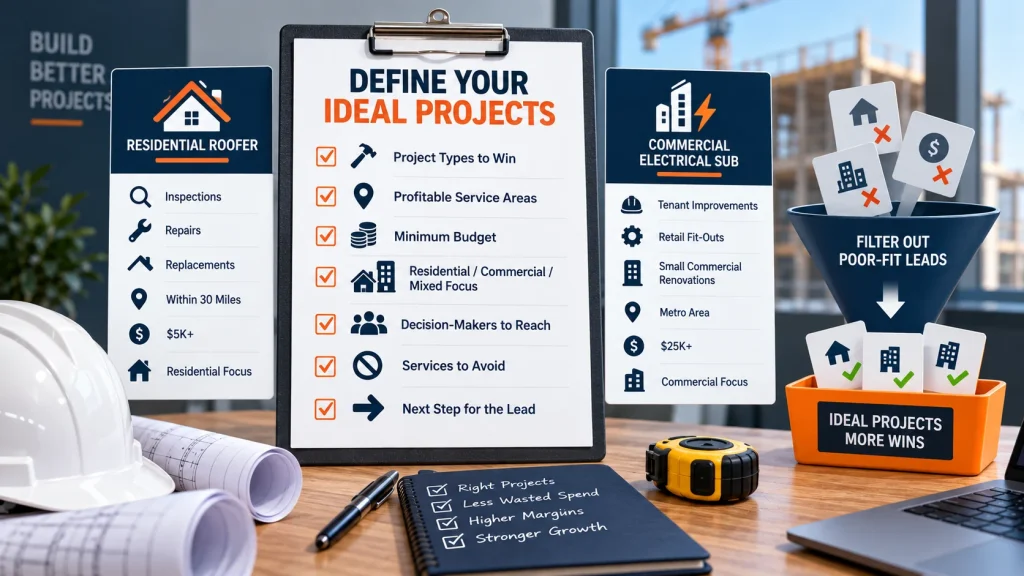
Before choosing a marketing channel, define your preferred work.
Write down:
- Project types you want to win
- Areas you can serve profitably
- Minimum project size or budget
- Residential, commercial, or mixed focus
- Decision-makers you need to reach
- Services you do not want to promote
- The next step you want a lead to take
For example, a residential roofer may focus on inspections, repairs, and replacements within a defined radius. A commercial electrical subcontractor may focus on tenant improvements, retail fit-outs, and small commercial renovations through general contractors and property managers.
This clarity prevents you from spending money on leads that do not fit your team, service area, or capacity.
The 21 Best Construction Marketing Ideas for 2026
1. Build a Website That Explains Your Fit Quickly
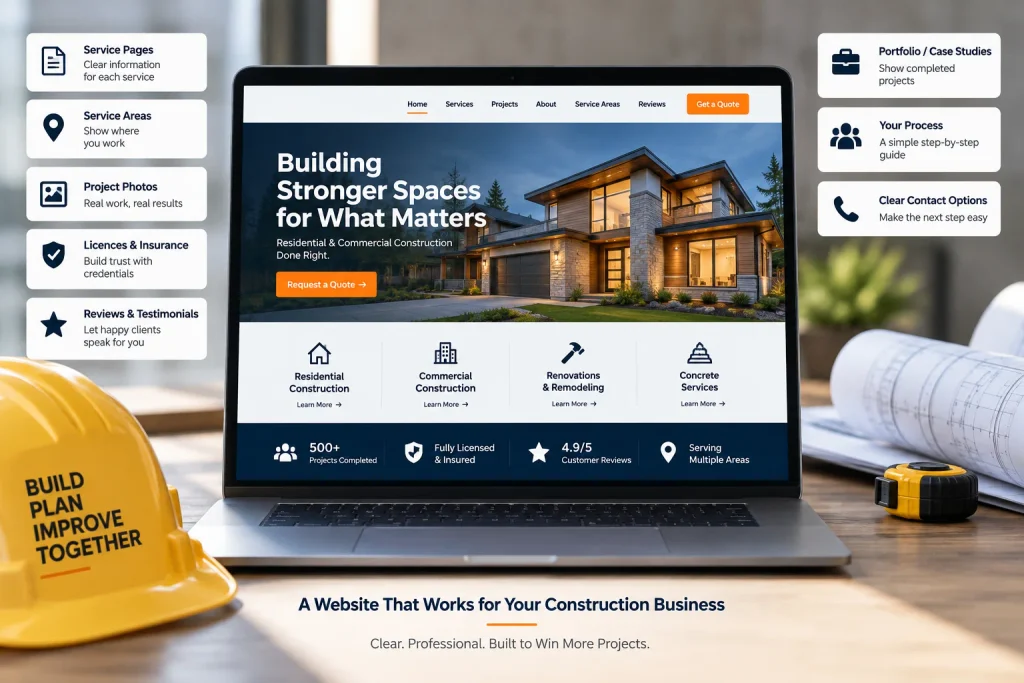
Your website should answer four questions within a few seconds:
- What work do you do?
- Where do you work?
- Who do you serve?
- How can someone request the next step?
Create separate pages for important services instead of placing everything on one general services page. A visitor looking for commercial concrete work, roof replacement, or a kitchen remodel should land on a page that directly addresses that service.
Include:
- Core service pages
- Service-area information
- Project photos and proof of work
- Licences, insurance, certifications, and affiliations where relevant
- Clear contact options
- Reviews and testimonials
- A portfolio or case-study section
- A simple explanation of your process
Avoid unsupported claims such as “the best contractor in town.” Show real evidence through completed work, customer feedback, relevant experience, and clear service details.
2. Create Service Pages Around Real Buying Intent
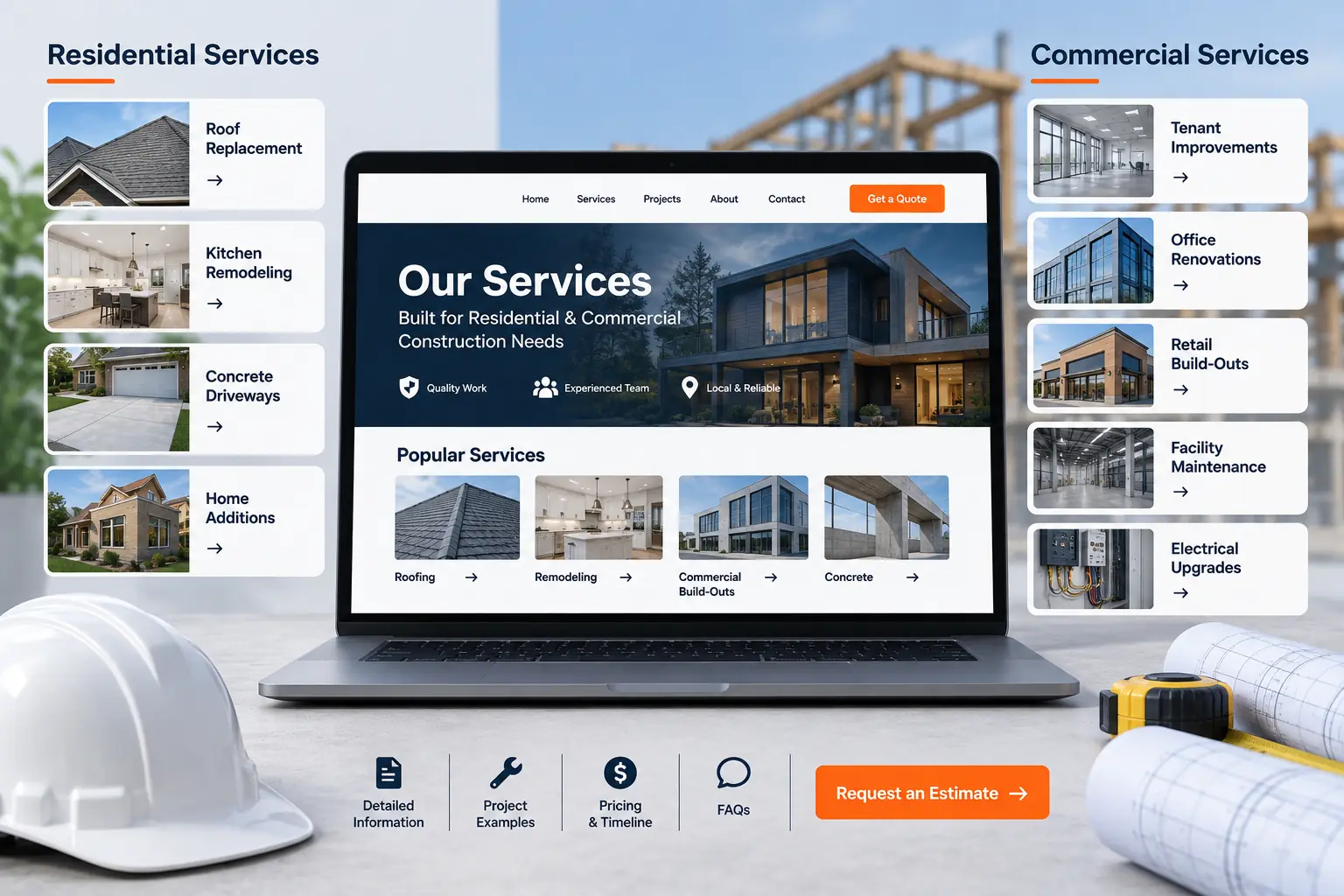
A useful service page should help a prospect understand whether you can handle their project.
For a residential contractor, that may mean pages for roof replacement, bathroom remodeling, concrete driveways, or home additions.
For a commercial contractor, it may mean pages for tenant improvements, office renovations, retail build-outs, facility maintenance, commercial painting, electrical upgrades, or subcontracting services.
Each page should cover:
- Typical scope of work
- Suitable project types
- Key pricing or timeline factors
- Materials or systems involved
- Frequently asked questions
- Relevant project examples
- A clear estimate, walkthrough, or consultation CTA
Do not make every page sound the same. A commercial fit-out buyer needs different information from a homeowner planning a kitchen renovation.
3. Build a Google Business Profile That Supports Local Trust
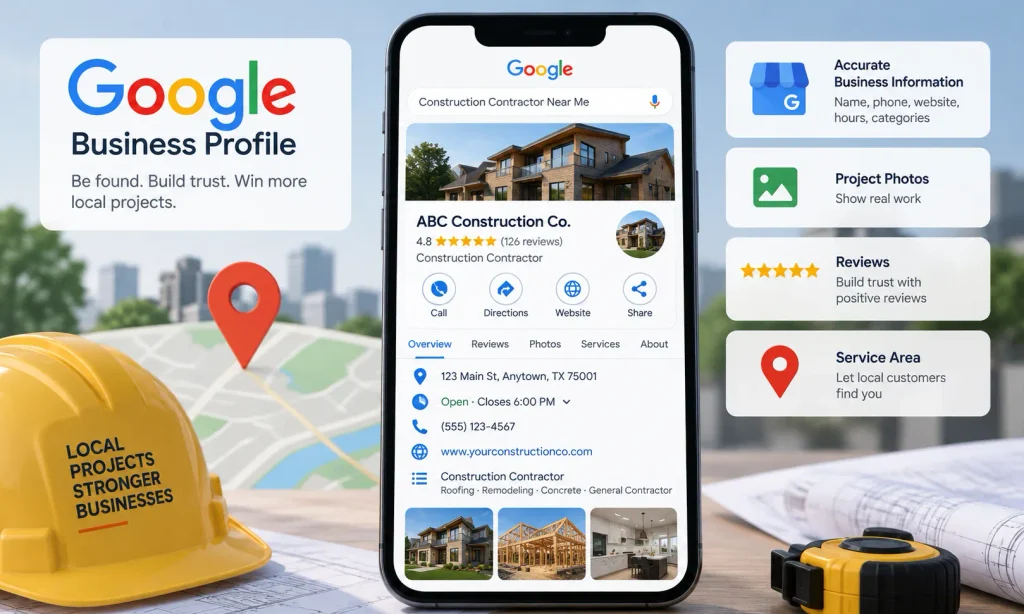
A complete Google Business Profile can help local customers find and evaluate your company.
Use accurate business information, including your real business name, phone number, website, hours, categories, and service area. Add current project photos and respond professionally to reviews.
Google states that local rankings are mainly influenced by relevance, distance, and prominence. A complete profile, positive reviews, relevant categories, accurate information, and wider online visibility can help your company appear more credible.
Do not use a false address or create multiple profiles for areas where you do not have a legitimate business presence.
4. Create Location Pages Only When They Add Real Value
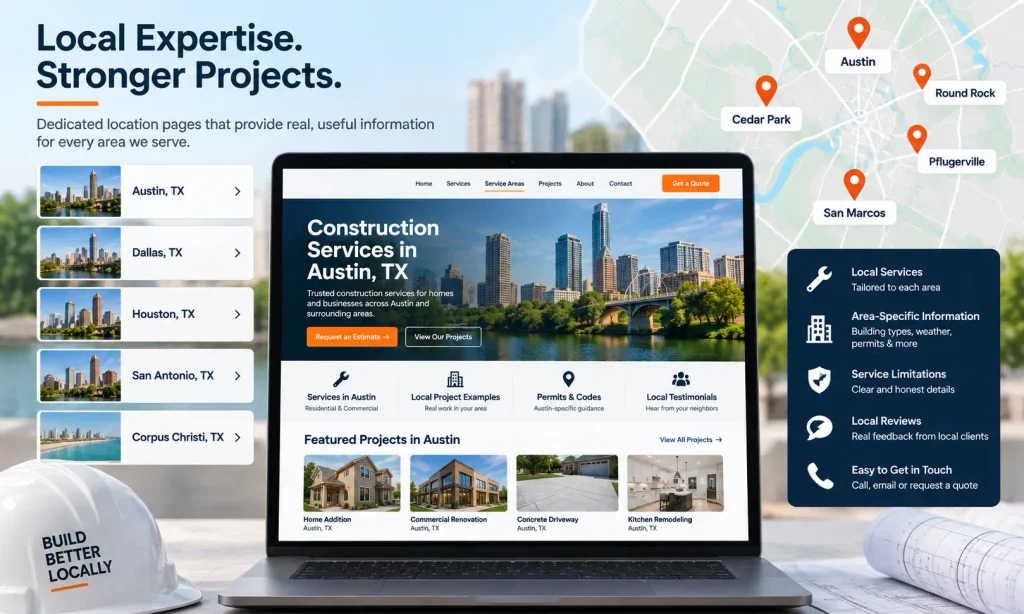
Location pages can help contractors serve multiple cities, suburbs, or neighbourhoods. They should be genuinely useful to the customer.
A strong location page may include:
- Services available in that area
- Project examples from the area, with client permission
- Local building types or weather conditions
- Service-area limitations
- Relevant permits or code considerations
- Local testimonials
- Clear contact information
For example, a contractor serving coastal areas may explain storm-damage considerations. A commercial contractor working in a city centre may explain access, loading, parking, or occupied-building constraints.
Do not create dozens of nearly identical pages with only the city name changed. Each page should offer original information and a clear reason for the customer to read it.
5. Publish Project Proof, Not Just a Photo Gallery
A gallery is useful. A project proof library is better.
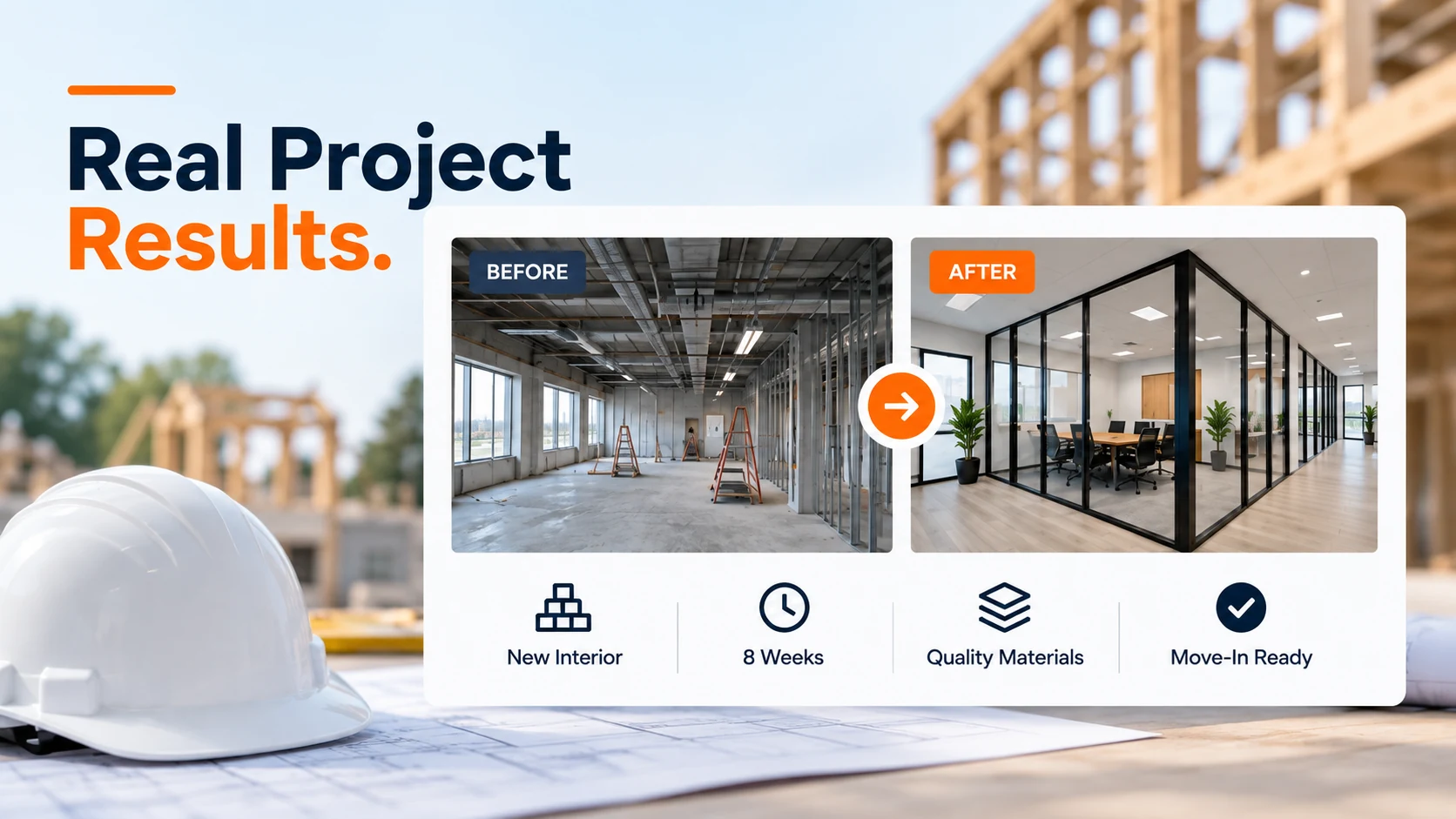
For each important project, explain what the customer needed, what your team did, and what changed after the work was completed.
Include:
- Project type and general location
- Customer goal or site challenge
- Scope of work
- Key materials, systems, or design choices
- Timeline where appropriate
- Before-and-after photos
- Final result
- Customer feedback, with permission
For example, instead of posting only a finished office photo, explain that the team completed a tenant improvement around an occupied business schedule, coordinated with the property manager, and delivered the agreed scope before the tenant move-in date.
This type of detail improves trust and gives your sales team stronger proof to share during estimates and proposal discussions.
6. Make Commercial Bid-Readiness Part of Your Marketing
Commercial buyers, general contractors, and property managers often need to confirm whether your company is qualified before they invite you to quote.
Keep these materials current and easy to access:
- Capability statement
- Core trades and project types
- Service areas
- Relevant case studies
- Insurance certificates
- Licences and certifications
- Safety information
- Bonding capacity, where applicable
- Key contacts
- References
- Prequalification documents
A commercial contractor should not wait until a bid invitation arrives to organize this information. Your website, capability statement, and sales follow-up should all communicate the same strengths.
7. Build a Genuine, Ongoing Review Process
Reviews are important because construction is a high-trust decision. A prospect wants to know how your company communicates, manages problems, keeps commitments, and completes work.
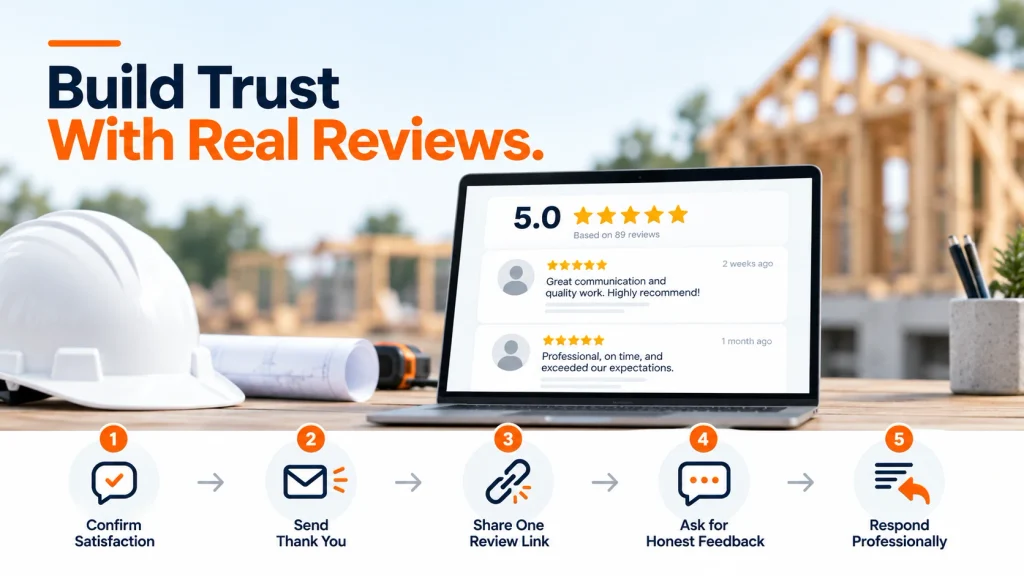
Create a repeatable process after a successful project milestone:
- Confirm that the customer is satisfied.
- Send a short thank-you message.
- Share one direct review link.
- Ask for an honest description of their real experience.
- Respond professionally to every review.
Never buy reviews, offer discounts for positive reviews, or pressure customers to leave five-star feedback. Genuine reviews are more credible and safer for your business.
8. Use Short-Form Video to Show Real Work
Video can help prospects understand the quality and process behind your work before they request an estimate.
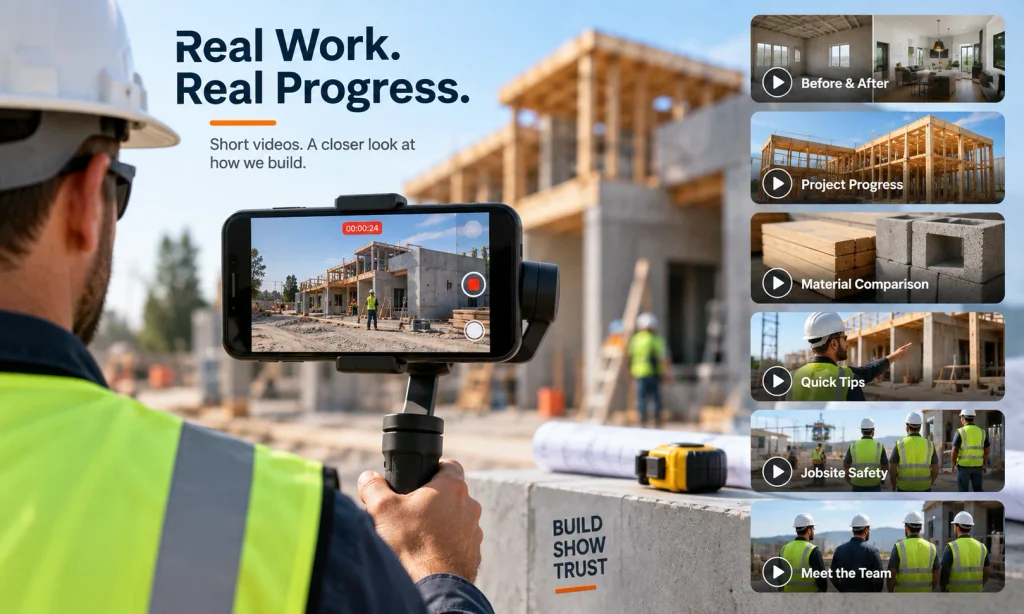
Useful video ideas include:
- Before-and-after project walkthroughs
- Roof, concrete, or renovation progress updates
- Material comparisons
- Quick explanations of common customer questions
- Jobsite safety or preparation practices
- Team introductions
- Customer-approved project stories
- A short look at your estimating or design process
A phone-recorded video can work well when it is clear and useful. Real jobsite footage is usually more persuasive than overly polished promotional content because it shows how your team actually works.
9. Answer Questions Customers Ask Before They Call
Educational content attracts prospects earlier in their decision process and helps your company demonstrate expertise.
Write about questions your team hears during calls, site visits, and estimate meetings.
Examples include:
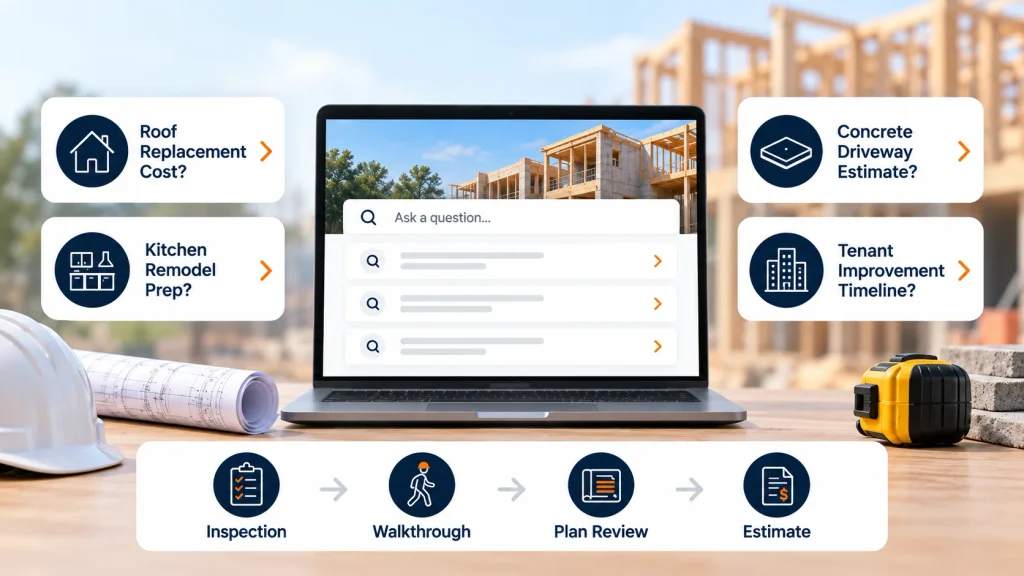
- What affects the cost of a roof replacement?
- What should a homeowner prepare before a kitchen remodel?
- How long can a commercial tenant improvement take?
- What is included in a concrete driveway estimate?
- What information should a property manager prepare before requesting a quote?
- How should a business compare commercial maintenance contractors?
Use practical knowledge from your work. Explain the factors that change the answer and be clear about what must be confirmed through an inspection, walkthrough, plan review, or detailed estimate.
10. Publish Cost Guides That Qualify Better Leads
Cost guides should help customers understand why construction prices vary. They should not create a false expectation that every project has one fixed price.
Explain the factors that affect cost:
- Project size
- Site conditions
- Demolition or structural work
- Material selection
- Labour requirements
- Access and staging
- Permit needs
- Design complexity
- Schedule requirements
For example, a remodeling company can explain why two kitchens of a similar size may have very different costs because of layout changes, plumbing relocation, cabinetry, material grade, and permit requirements.
Use current local experience when publishing price ranges. State clearly that the final quote depends on the confirmed scope and project conditions.
11. Respond While the Opportunity Is Active
Slow response causes contractors to lose good opportunities to competitors.
Assign ownership for every new enquiry. Someone on your team should be responsible for the first call, text, email, CRM record, and next step.
A practical first response should confirm:
- Project type
- Property location
- Timeline
- Budget expectations
- Decision-maker involvement
- Photos, plans, or specifications
- The best next step
For a simple residential repair, the next step may be an inspection. For a commercial project, it may be a discovery call, site walkthrough, plan review, or prequalification request.
12. Use AI to Support Lead Intake, Not Replace Judgment
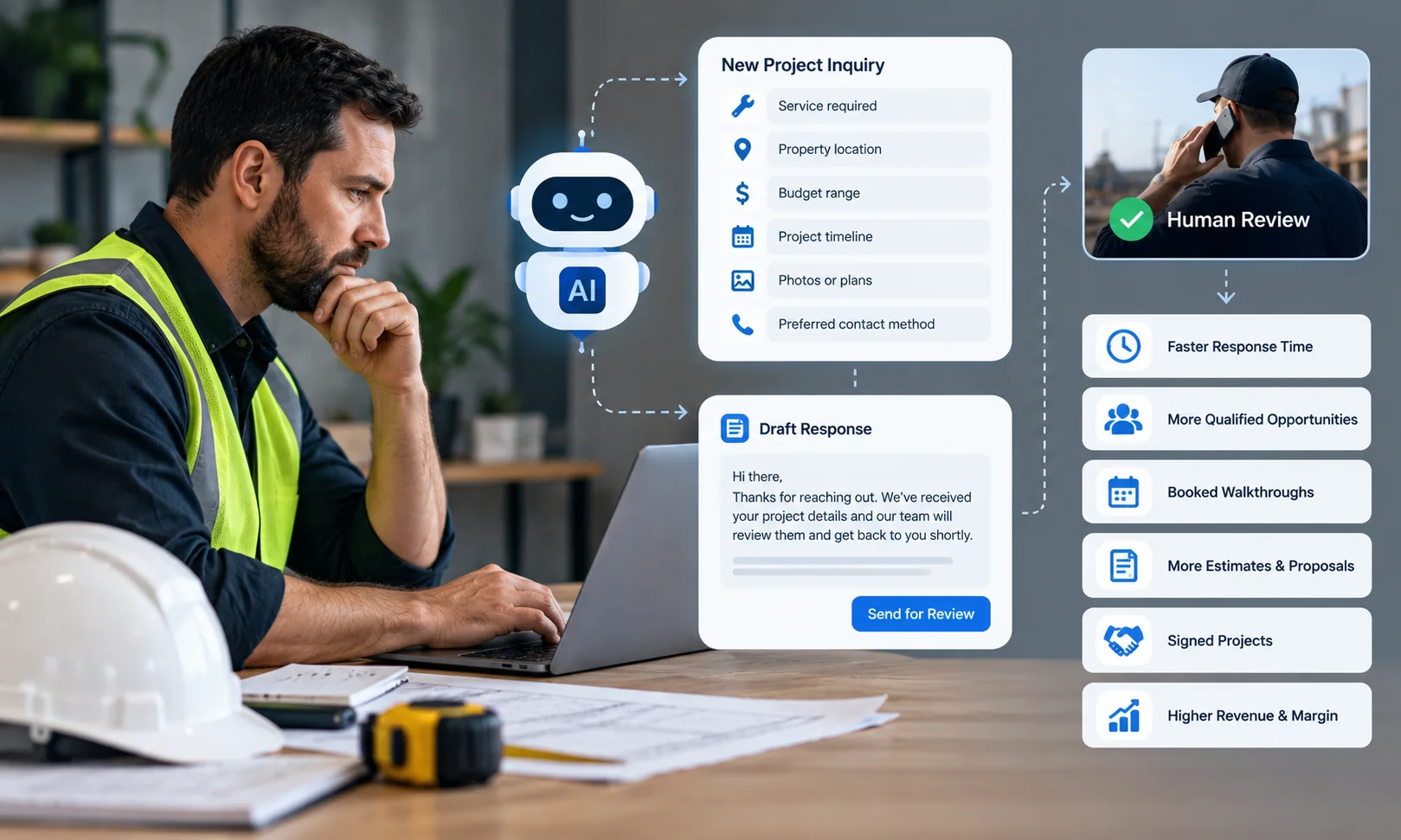
AI tools can help contractors organize incoming project details, summarize form submissions, draft first-response messages, and route enquiries to the right person.
A website assistant may collect:
- Service required
- Property location
- Budget range
- Project timeline
- Photos or plans
- Preferred contact method
Use AI to improve response speed and consistency. Do not let it make final pricing commitments, confirm technical feasibility, or send unreviewed promises to customers.
Measure the result through response time, qualified opportunities, booked walkthroughs, estimates, proposals, signed projects, revenue, and gross margin.
13. Create a Clear Lead Qualification System
More leads do not always mean better business. A contractor should be able to identify whether a project is suitable before investing significant estimating time.
Qualify leads against:
- Scope of work
- Service area
- Property access
- Timeline
- Budget expectations
- Decision-maker involvement
- Drawings or specifications
- Project type
- Desired next step
A CRM can help your team record this information consistently. It also makes it easier to review why a project was won, lost, delayed, or declined.
14. Build Relationships That Produce Better Projects
Strong referral relationships can create a more reliable pipeline than relying only on ads or random enquiries.
Potential partners include:
- General contractors
- Architects and designers
- Developers
- Property managers
- Real estate agents
- Home inspectors
- Restoration companies
- Suppliers
- Insurance professionals
- Facility managers
Give partners a simple explanation of your ideal project, service area, capability, and contact process.
For example, a commercial flooring contractor can send local GCs a short capability statement, examples of completed tenant improvements, insurance details, and a direct contact for pricing or site walkthroughs.

15. Get Visibility Earlier in Commercial Preconstruction
Commercial work is often influenced before formal bid invitations are sent.
Contractors can improve early visibility by:
- Monitoring local development and renovation activity
- Maintaining relationships with GCs, architects, and property managers
- Following up after project announcements
- Sharing relevant project experience
- Keeping prequalification documents ready
- Offering a useful early conversation about scope, access, scheduling, or trade-specific concerns
The goal is not to assume every project will become an opportunity. It is to learn about suitable work early enough to decide whether your company should pursue it.
Need more suitable residential or commercial opportunities? Construction Lead Pro delivers exclusive, phone-verified leads matched to your trade, service area, and project type, so your team can focus on qualifying real projects instead of chasing weak enquiries.
16. Use Local Services Ads When Your Trade Is Eligible
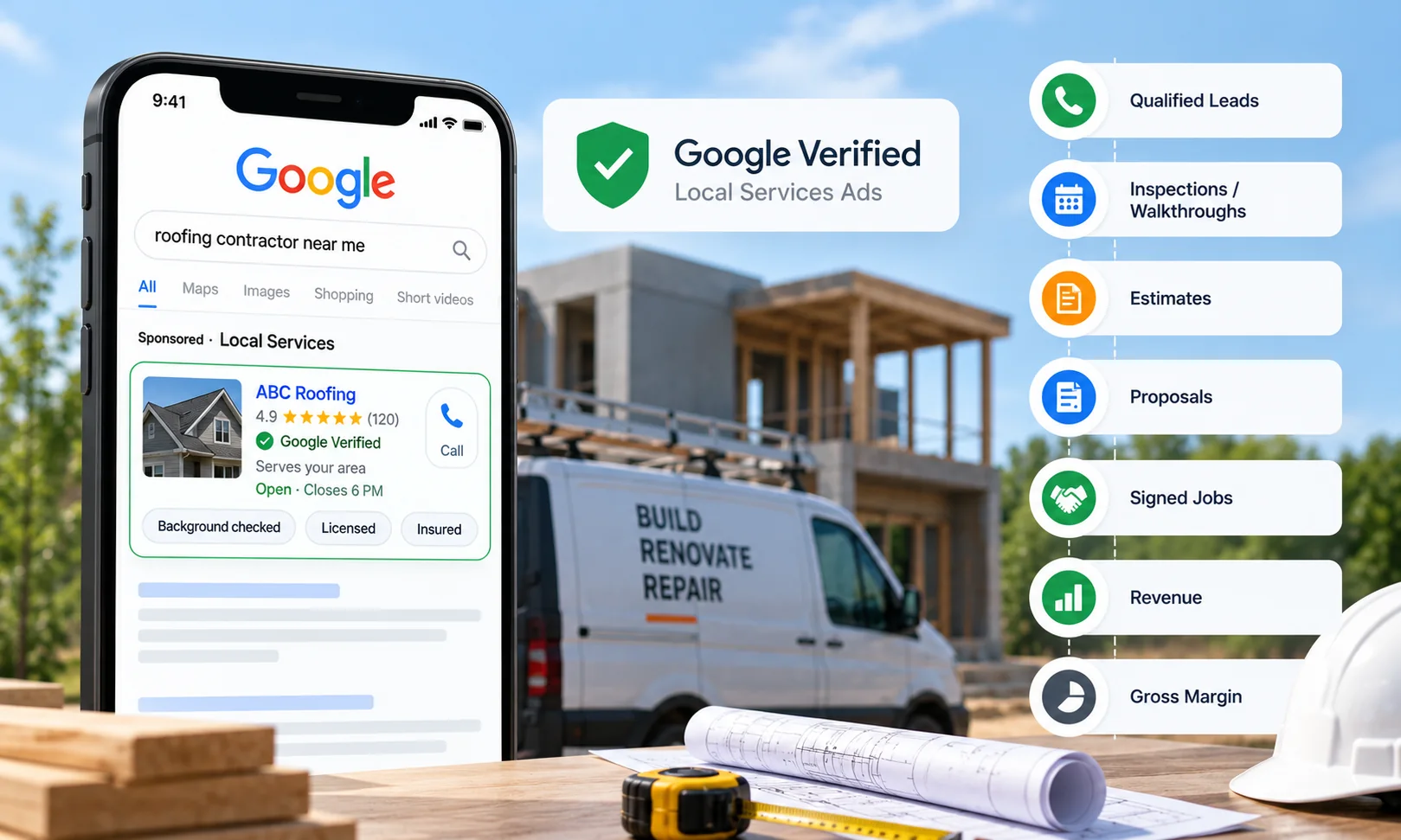
Google Local Services Ads can help eligible service businesses appear prominently when nearby customers search for selected services. These ads operate on a pay-per-lead model.
Google now uses the Google Verified badge for eligible Local Services advertisers. Screening requirements vary by trade and location and may include business registration, insurance, licence, background, and review checks.
Before investing, confirm that your category and area are eligible. Then track beyond call volume:
- Qualified leads
- Inspections or walkthroughs
- Estimates
- Proposals
- Signed jobs
- Revenue
- Gross margin
A lead source that produces many calls but few suitable projects may not be profitable.
17. Use Paid Search for High-Intent Services
Paid Search can help when you need demand quickly for a specific service or location.
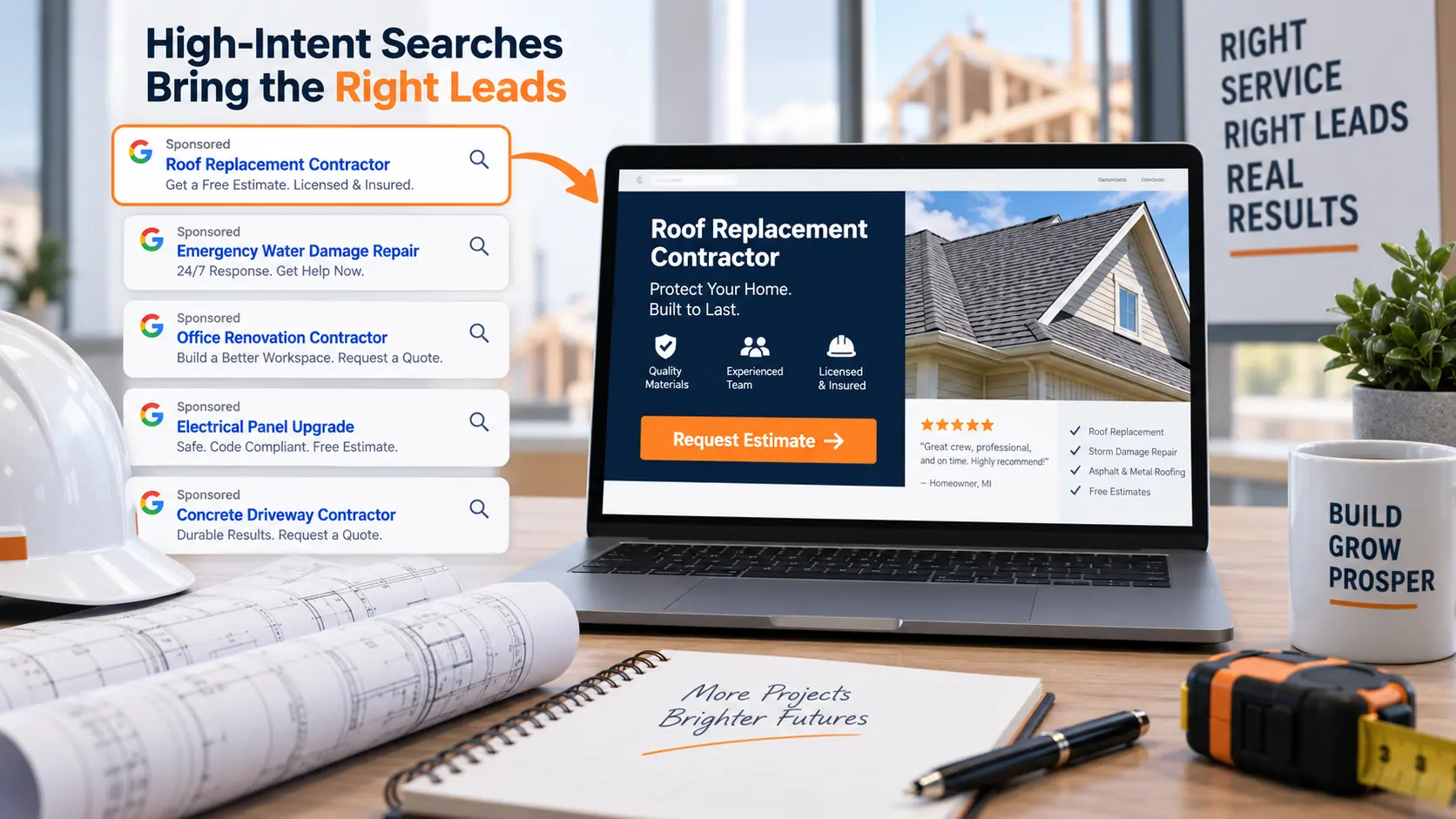
Create campaigns around clear commercial intent, such as:
- Roof replacement contractor
- Emergency water damage repair
- Commercial painting contractor
- Office renovation contractor
- Electrical panel upgrade
- Concrete contractor for driveways or commercial work
Send each ad to a dedicated landing page, not a generic homepage. The landing page should match the searcher’s need and show relevant project proof, service details, reviews, and a clear contact option.
18. Retarget Visitors With Relevant Proof
Many construction customers compare several companies before deciding. Retargeting can help you remain visible after a prospect visits an important service, portfolio, or cost page.
Show them useful proof, such as:
- A relevant case study
- Customer testimonials
- A project video
- A cost guide
- A consultation invitation
- A reminder of your service area or specialty
Avoid repetitive ads and misleading urgency. Keep your privacy notice current and give visitors appropriate consent choices where required.
19. Use Email to Stay Useful Between Projects
Email is useful for former customers, referral partners, and leads who are not ready to start immediately.
A monthly update can include one useful topic, a relevant project example, and one clear next step.
Possible topics include:
- Seasonal maintenance reminders
- Storm-preparation checklists
- Commercial facility maintenance tips
- Recent project updates
- Planning advice before a renovation
- Material or design decisions customers should consider
Only contact people who have agreed to receive marketing communication, and make it easy to unsubscribe.
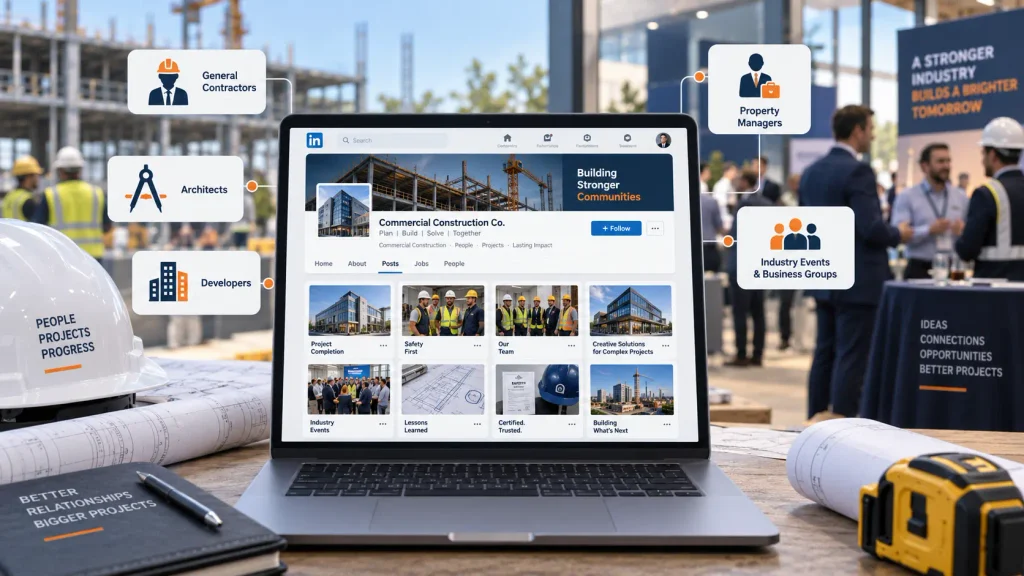
20. Use LinkedIn and Industry Networks for Commercial Work
LinkedIn is usually more useful for commercial contractors than it is for homeowner-focused trades.
Share information that helps GCs, architects, developers, and property managers understand your capability:
- Commercial project case studies
- Safety practices
- Team expertise
- Trade-specific solutions
- Project completion updates
- Industry events
- Company certifications
- Lessons from complex projects
Also participate in local construction associations, trade events, supplier events, and relevant business groups. Relationships are often a major part of commercial project selection.
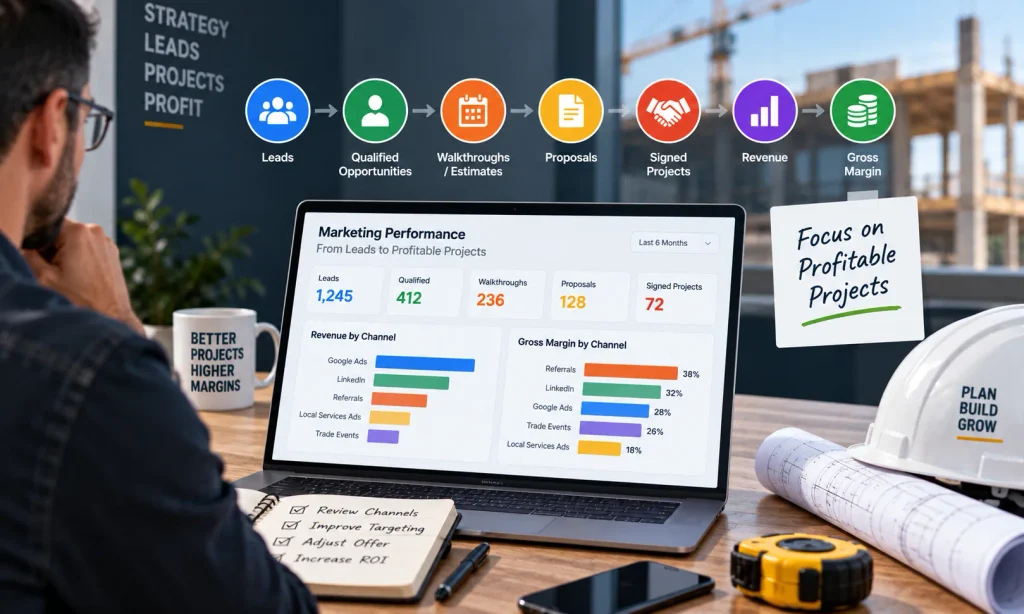
21. Measure Marketing by Profitability, Not Lead Volume
Track every lead from its source through the sales process:
- Leads
- Qualified opportunities
- Walkthroughs or estimates
- Proposals
- Signed projects
- Revenue
- Gross margin
This shows which marketing channels produce projects your company can actually deliver profitably.
Review lead sources monthly. If a channel produces high call volume but poor qualification, adjust the targeting, service page, offer, or follow-up process. If a channel produces fewer leads but more profitable jobs, it may deserve more investment.
A Simple 90-Day Construction Marketing Plan
Days 1-30: Build the Foundation
- Define the projects, areas, and customers you want most.
- Improve your most important service pages.
- Update your Google Business Profile.
- Organize reviews, project photos, licences, insurance details, and case studies.
- Set up a simple CRM pipeline.
- Create a consistent lead-qualification process.
- Prepare commercial capability and prequalification documents, if relevant.
Days 31-60: Increase Qualified Visibility
- Publish one useful cost guide or customer-question article.
- Create one detailed project case study.
- Post short project videos.
- Build outreach to GCs, architects, property managers, realtors, or developers.
- Launch a focused paid Search or Local Services Ads campaign where appropriate.
- Improve the page and follow-up process for the service you want to sell most.
Days 61-90: Improve What Produces Good Work
- Review lead source, qualification rate, booked estimates, proposals, signed jobs, revenue, and gross margin.
- Reduce spending on low-quality sources.
- Invest further in channels producing suitable projects.
- Continue collecting genuine reviews and customer-approved project proof.
- Improve sales follow-up and lost-project tracking.
- Refresh your best service, location, and commercial pages with new evidence.
Common Construction Marketing Mistakes to Avoid
- Marketing every service to every customer
- Creating thin location pages with little original value
- Paying for reviews or offering incentives for positive reviews
- Sending paid traffic to a generic homepage
- Promising instant prices before confirming site conditions
- Using AI-generated answers without human review
- Relying on stock photos instead of real project proof
- Ignoring privacy and consent requirements for retargeting
- Failing to track lead quality through to revenue and gross margin
- Waiting for bid invitations instead of building commercial relationships earlier
- Relying only on word of mouth without a repeatable pipeline
Frequently Asked Questions
What is the most effective marketing channel for construction companies?
For many local residential contractors, Google Business Profile visibility, reviews, local service pages, and paid Search are high-intent channels. Commercial contractors often need a mix of project visibility, GC and architect relationships, prequalification, case studies, and targeted outreach.
Does SEO still matter for contractors?
Yes. SEO helps customers find service pages, project examples, local information, and cost guides while they are researching a contractor. Focus on clear site structure, useful information, original project experience, and trustworthy proof.
How can a commercial contractor generate more opportunities?
Build relationships with GCs, architects, developers, property managers, and facility managers. Keep prequalification materials ready, show relevant project experience, monitor suitable early-stage projects, and follow up with a clear capability statement.
Should contractors use AI tools?
Yes, when AI improves a defined workflow, such as lead intake, summaries, reminders, or first-response drafts. A qualified person should still control technical advice, pricing, estimates, contracts, and customer commitments.
How long does construction marketing take to work?
Paid campaigns may deliver early lead data, while local visibility, content, reviews, relationships, and brand reputation build over time. Judge progress by the quality and profitability of the projects entering your pipeline, not only by lead volume.
Final Thoughts
Construction marketing should make it easier for the right customer to choose your company.
Show the work you have completed. Explain the projects you are best suited to handle. Respond while opportunities are active. Build relationships before you need them. Track which sources create qualified projects and profitable work.
When referrals alone are not producing enough suitable opportunities, Construction Lead Pro can help you add exclusive, phone-verified residential and commercial leads matched to your trade, service area, and project type.


